Press, Calender & Guide Rolls
Precision process rolls for paper, film, textile, printing and metal processing lines. Ground to 0.01 mm runout, hard-chrome plated or covered, and dynamically balanced for line speed.
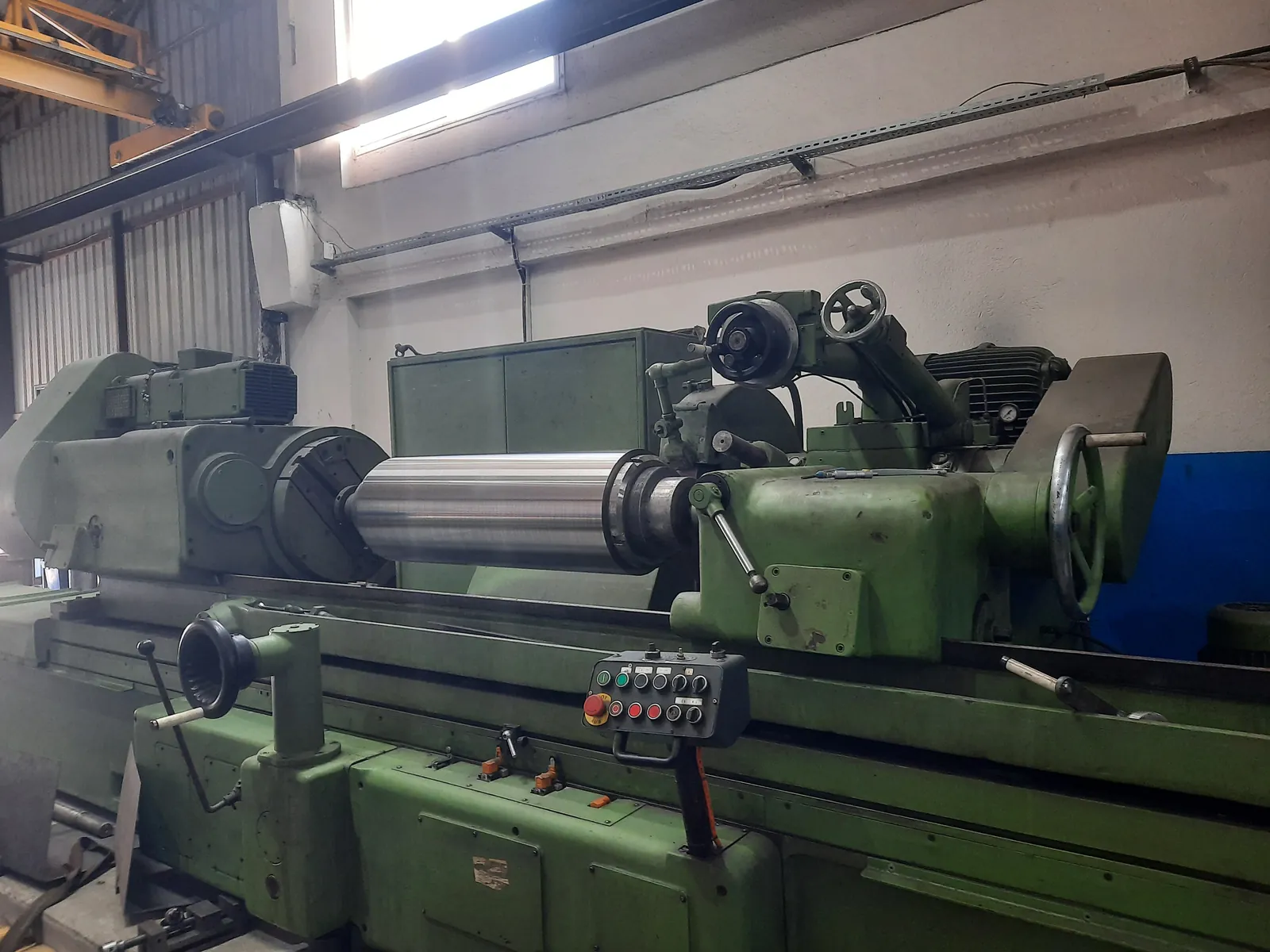
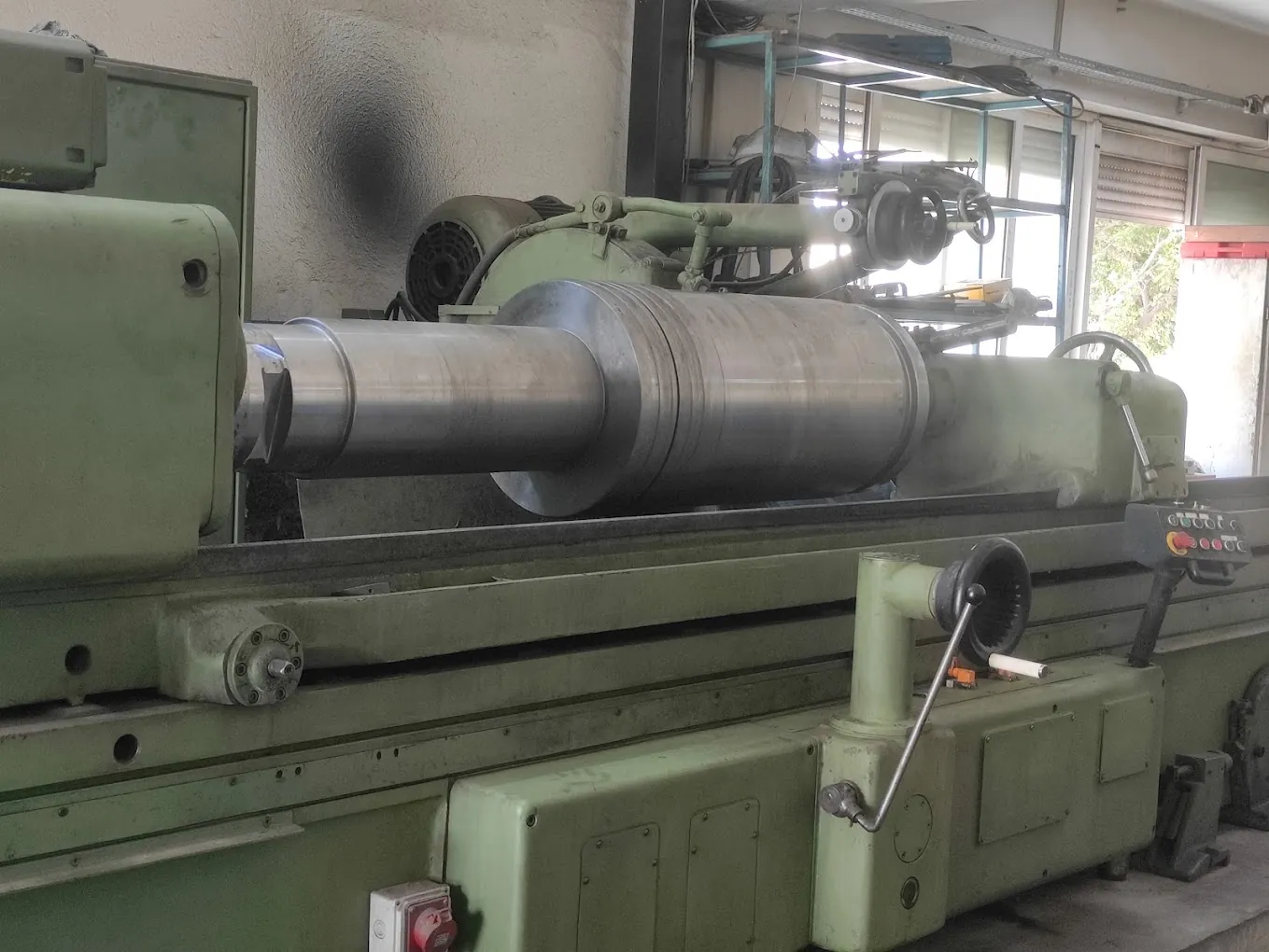
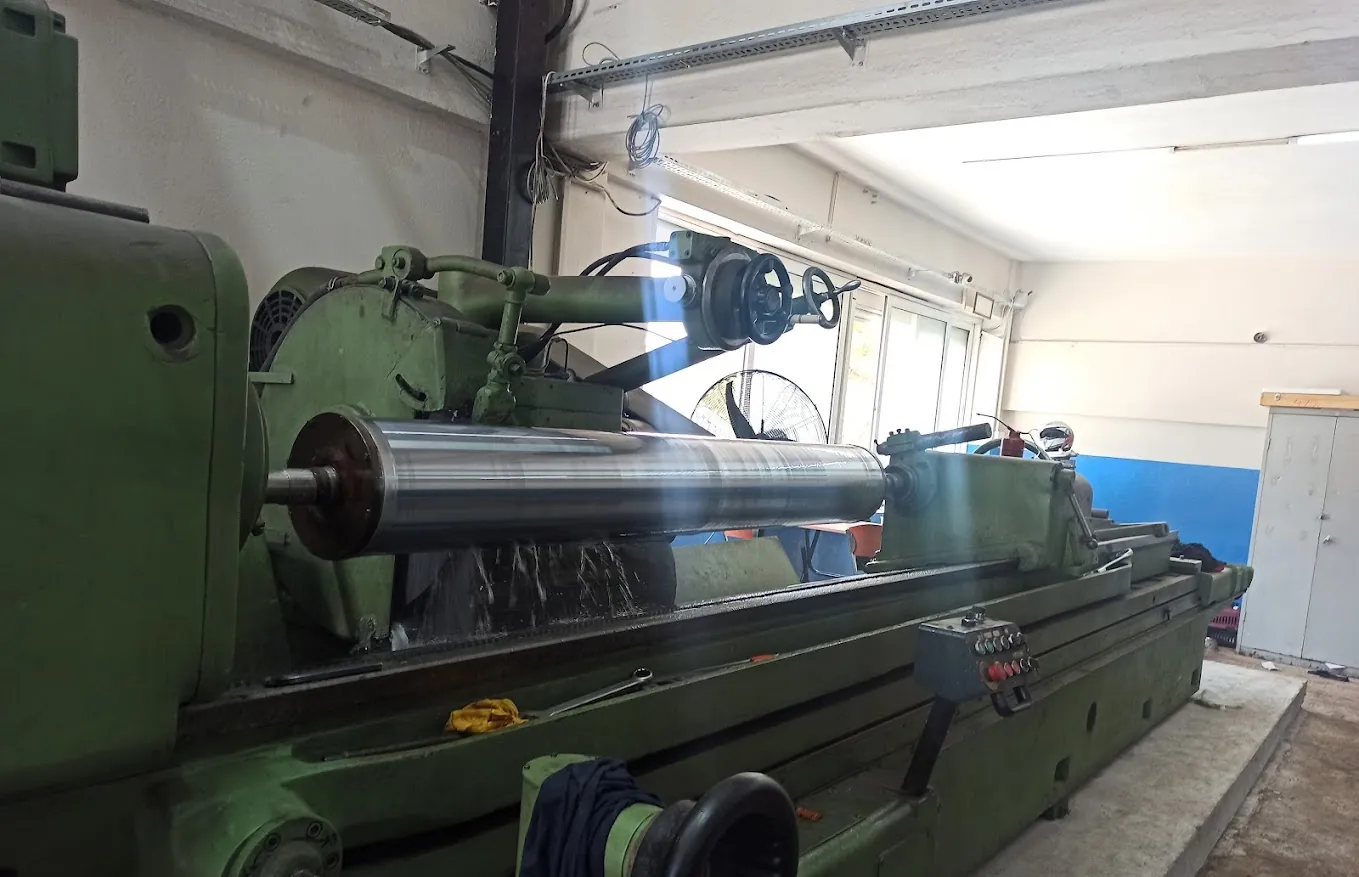
Process Rolls on Our Grinders
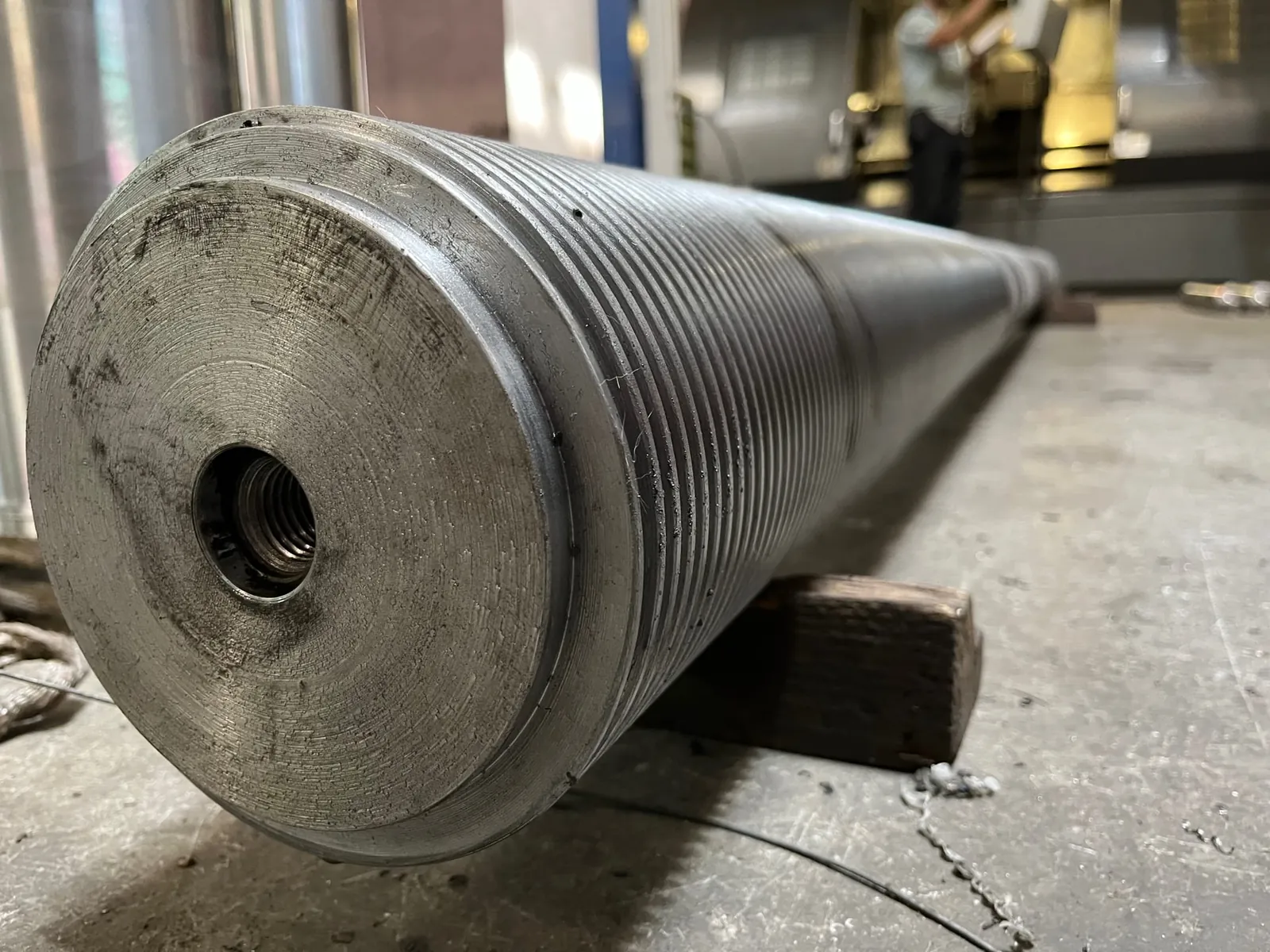
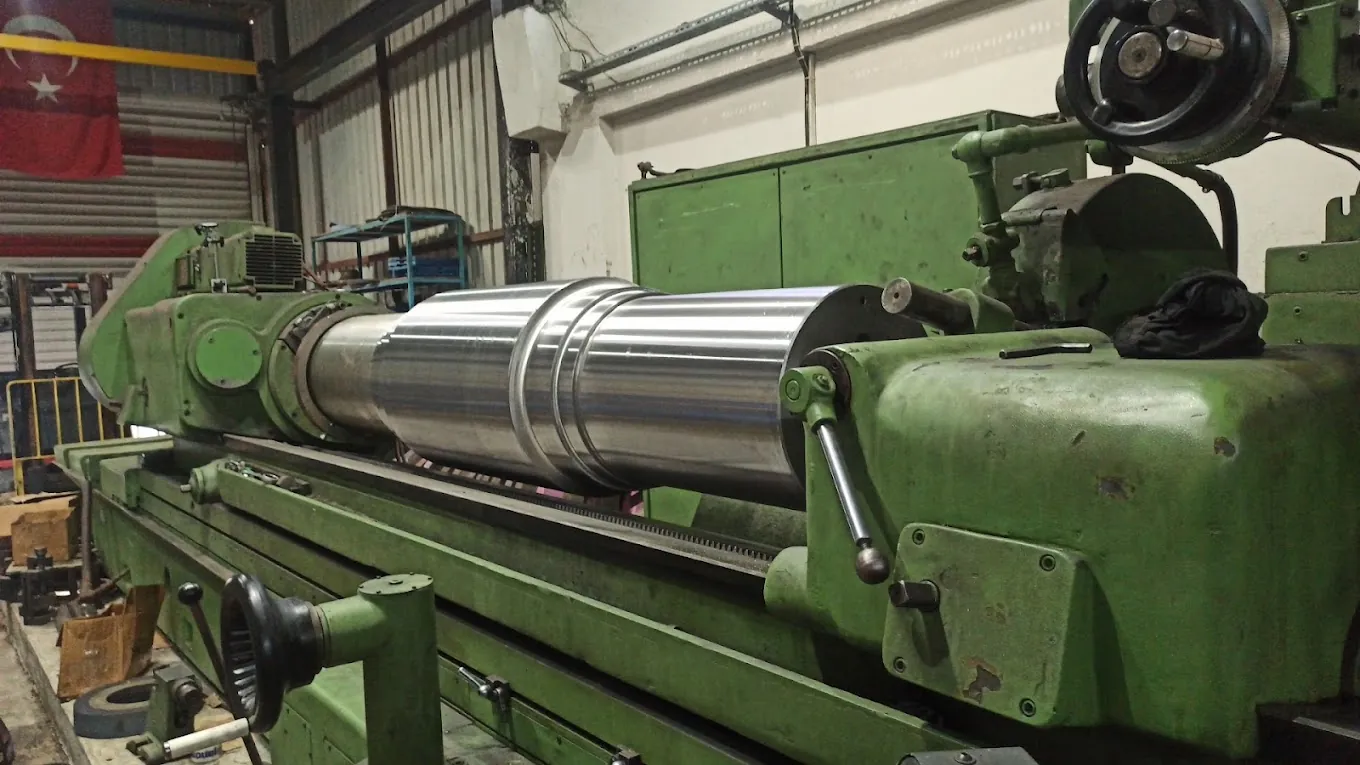
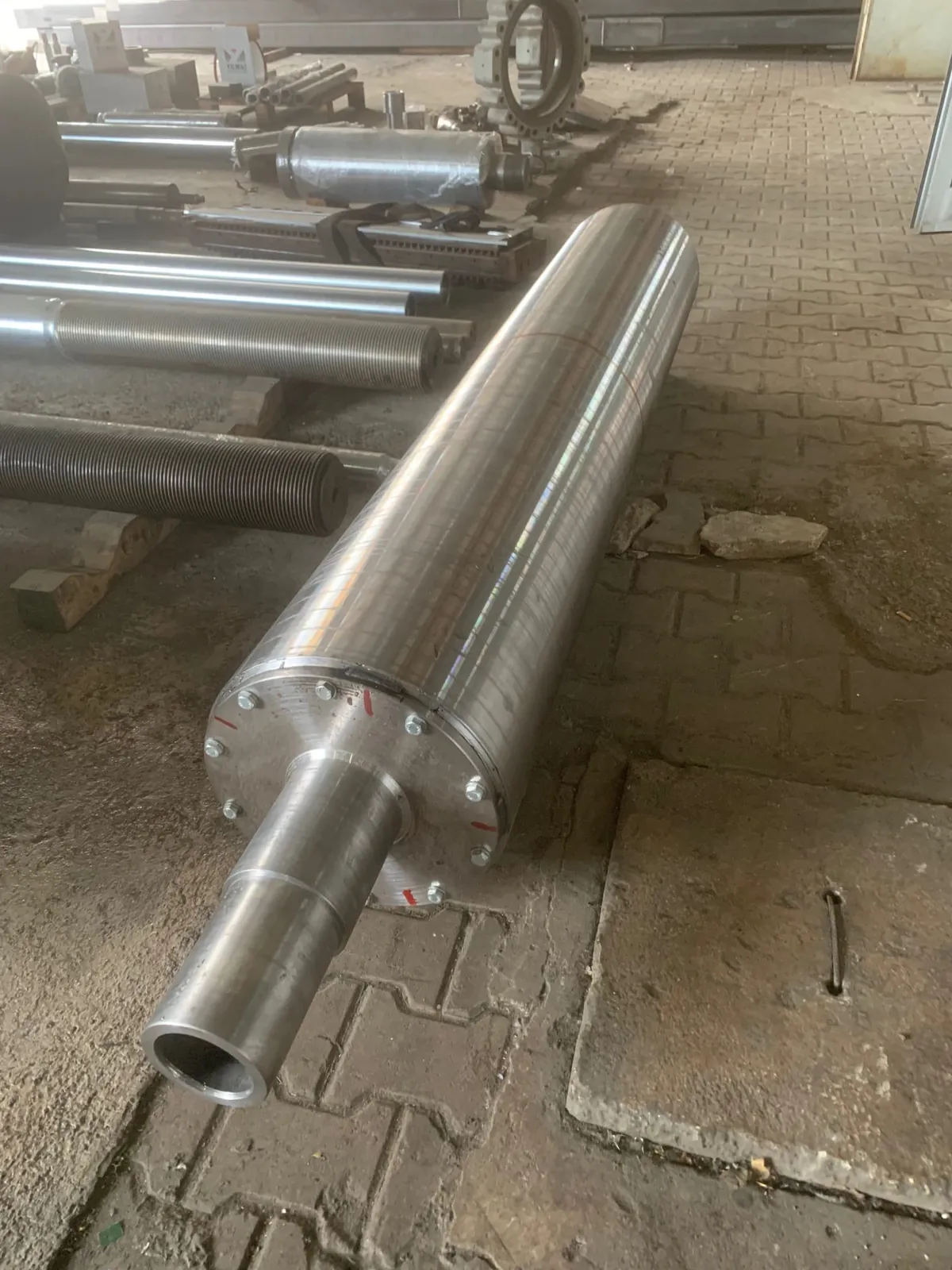
Process Rolls We Manufacture
Press rolls
Solid or shell rolls that press webs, sheets or strip under load.
Calender rolls
Ground and chrome-plated rolls for smoothing and finishing.
Guide & carrier rolls
Light or heavy rolls that guide and support moving webs and strip.
Pinch & nip rolls
Paired rolls that grip and drive material through a line.
Spreader & grooved rolls
Rolls with grooves or profiles that spread or track material.
Table & transport rolls
Heavy rolls for metal processing and handling lines.
Runout and Balance Decide How a Process Roll Performs
At line speed, a process roll that runs out by a few hundredths of a millimetre causes uneven pressure, web wrinkles, coating streaks and vibration. Our process rolls are turned, then ground between centres on long-bed cylindrical grinders to 0.01 mm size and runout, with surface finish down to Ra 0.2 µm, and dynamically balanced.
- Body and journals ground in one setup for concentricity
- Crowned profiles ground on request
- Hard chrome, rubber or PU surfaces
- Runout and surface finish documented for every roll
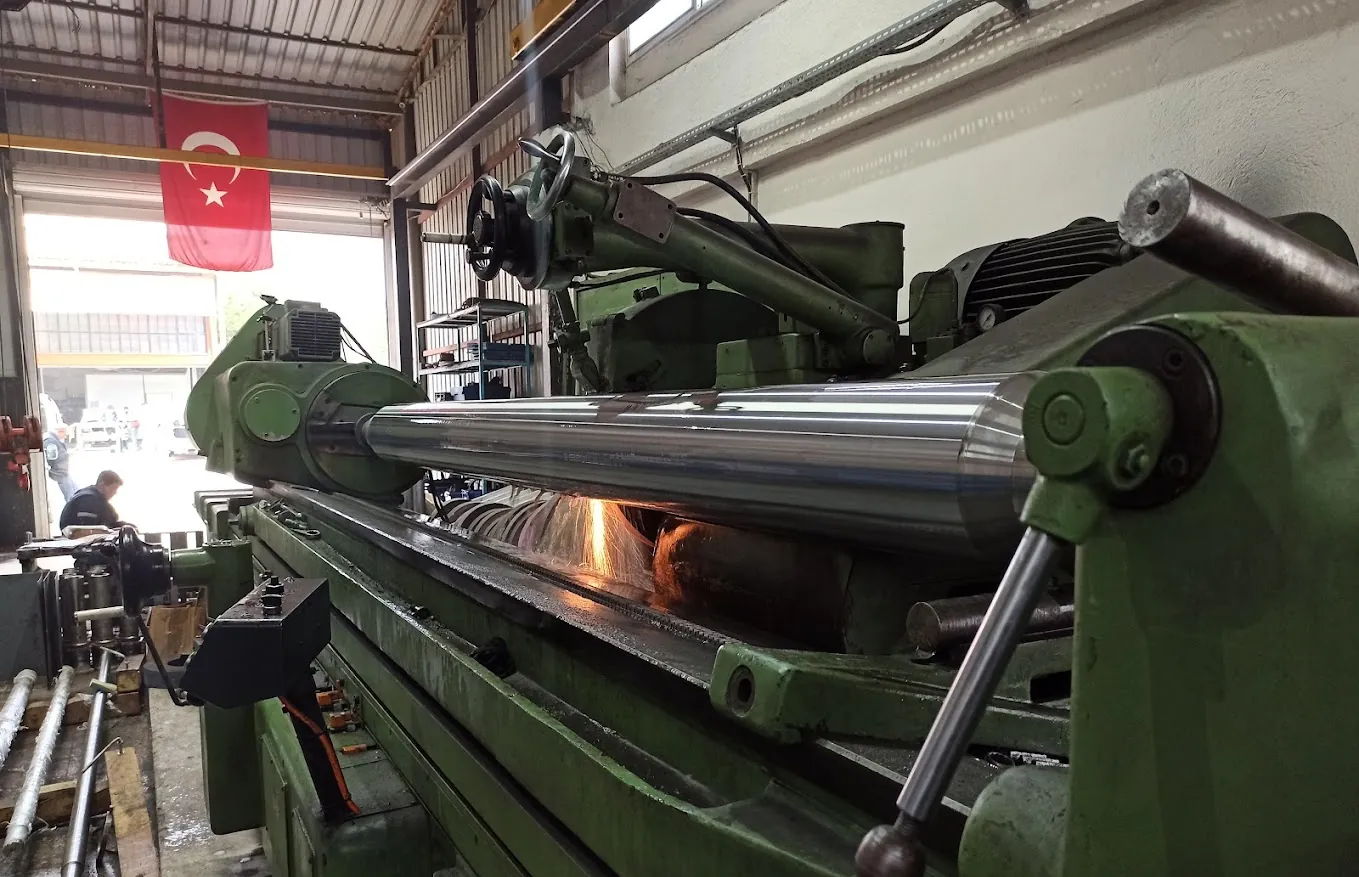
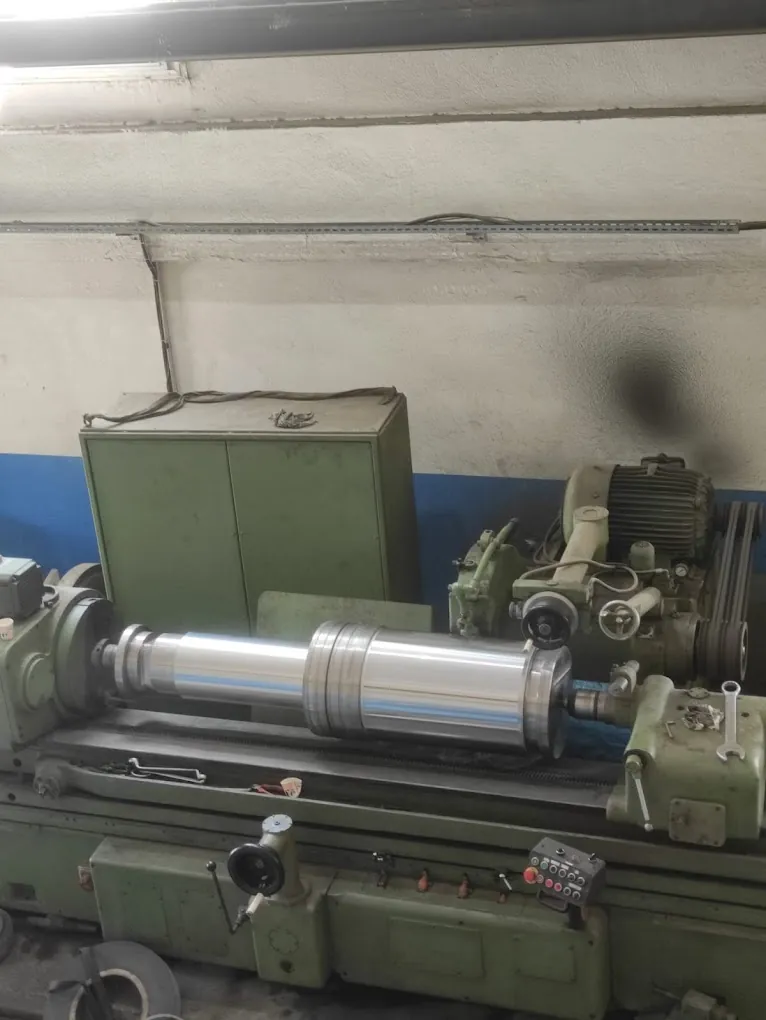
Process Roll Capacity
Send the drawing with diameter, face length, journal dimensions, runout and surface requirements.
| Diameter | Up to Ø3,200 mm |
|---|---|
| Length | Up to 6,000 mm |
| Grinding | 0.01 mm size and runout, Ra 0.2 µm |
| Precision parts | ±0.005 mm |
| Surfaces | Ground steel, hard chrome, rubber, polyurethane |
| Balancing | Dynamic balancing |
| Documents | Runout and dimensional report, EN 10204 3.1 |
Questions About Process Rolls
What runout can you achieve on process rolls?
Rolls are ground to 0.01 mm size and runout, with surface finish down to Ra 0.2 µm.
Can you grind crowned rolls?
Yes. Crowned profiles are ground on request.
Do you hard chrome plate process rolls?
Yes. Rolls are ground, plated and finish-ground in-house.
Can you regrind our existing process rolls?
Yes. We regrind, rechrome and rebalance worn process rolls.
Process Rolls for Paper, Film, Textile and Metal Lines
Process rolls work in the heart of a production line, in direct contact with the product. Paper, film, foil, textile and steel strip all show every flaw a roll has. That is why process rolls are bought on precision, not just size, and why the supplier's grinding capability matters more than anything else.
Grinding is the core
We operate a full range of cylindrical grinders, from small precision machines to long-bed roll grinders, described on our machine park page and our roll grinding service page. The same machines regrind worn rolls sent in for service.
Surfaces and balancing
Process rolls are supplied ground steel, hard-chrome plated or rubber or PU covered, and dynamically balanced for line speed.
Process rolls run in paper and pulp, steel and metal processing and food lines. Send your drawing via the contact page.
Shell rolls and solid rolls
Small and medium process rolls are often made from solid bar, which gives the highest stiffness. Larger rolls are usually shell rolls: a heavy tube or rolled shell with end discs and journals. Shell rolls are lighter for their diameter and easier to balance at high speed. The right choice depends on diameter, face length, load and speed, and we follow the design on your drawing or advise if you ask.
Crown and deflection
Long rolls bend under their own weight and under load. A press or calender roll that is perfectly cylindrical at rest will apply less pressure in the middle than at the ends when loaded. A ground crown compensates for this deflection. If your drawing specifies a crown, we grind it; if you are replacing a roll with an unknown crown, we can measure the old roll.
Journals and bearings
Process rolls depend on accurate journals. We grind the journals and the roll body in one setup for concentricity, and check the result against the bearing tolerances on your drawing.
Repeat rolls and spares
For lines with many identical rolls, we build spares to the same drawing, so a worn roll can be swapped immediately and sent for regrinding.