Dynamic Balancing of Rollers and Drums
Every roller we make or repair can be dynamically balanced before it ships, to the balance grade on your drawing. Less vibration, quieter running and longer bearing and belt life.
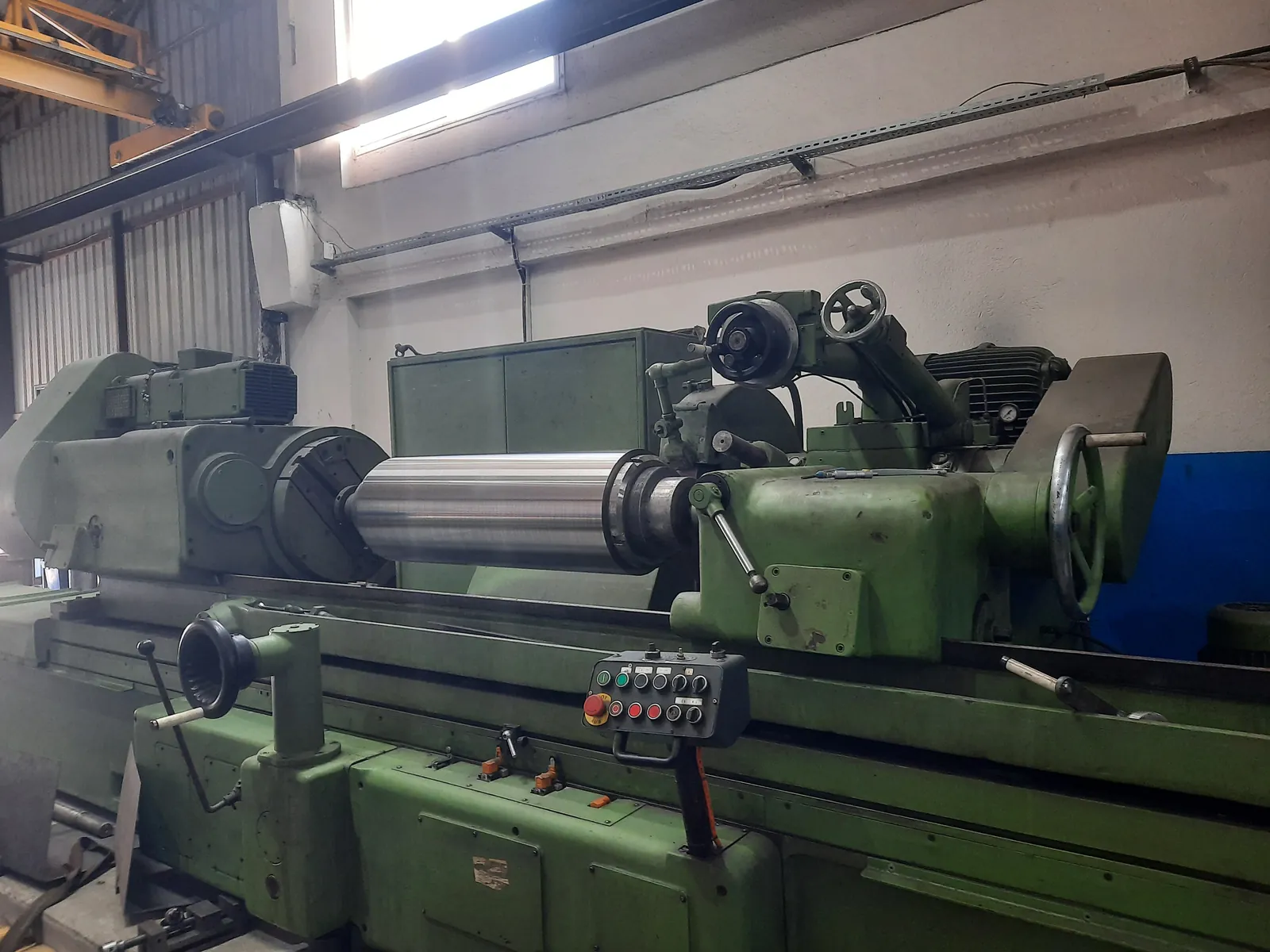
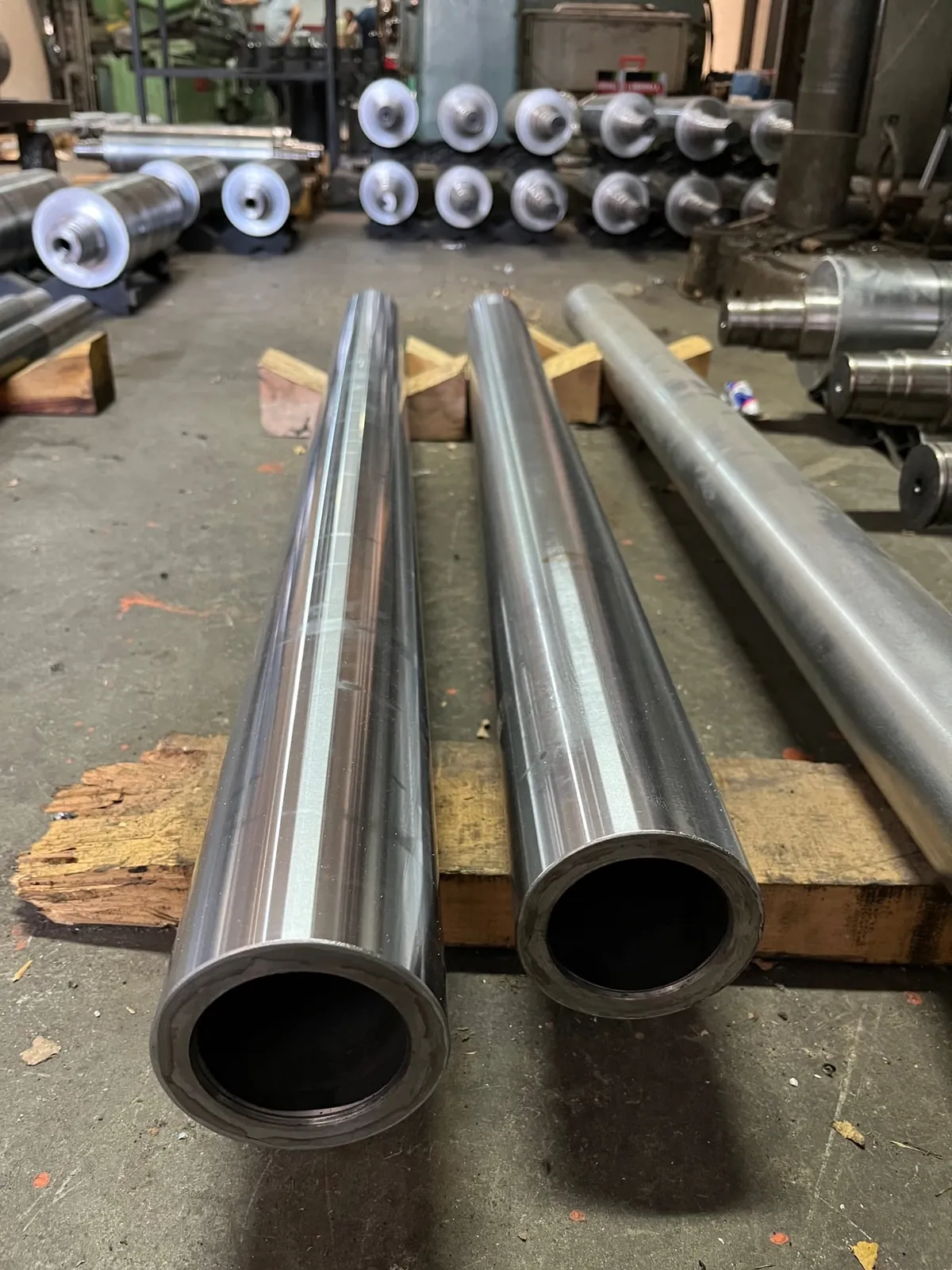
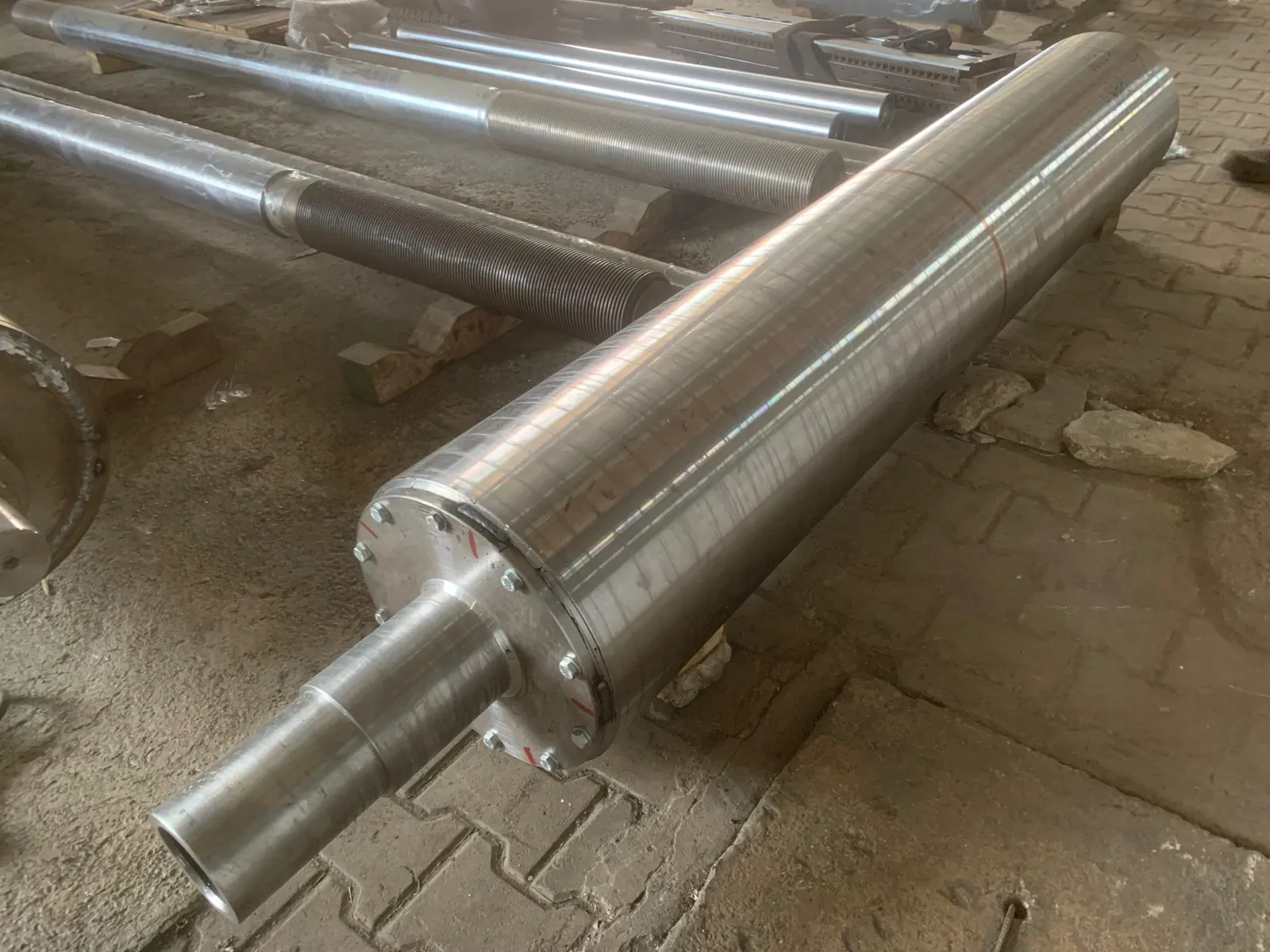
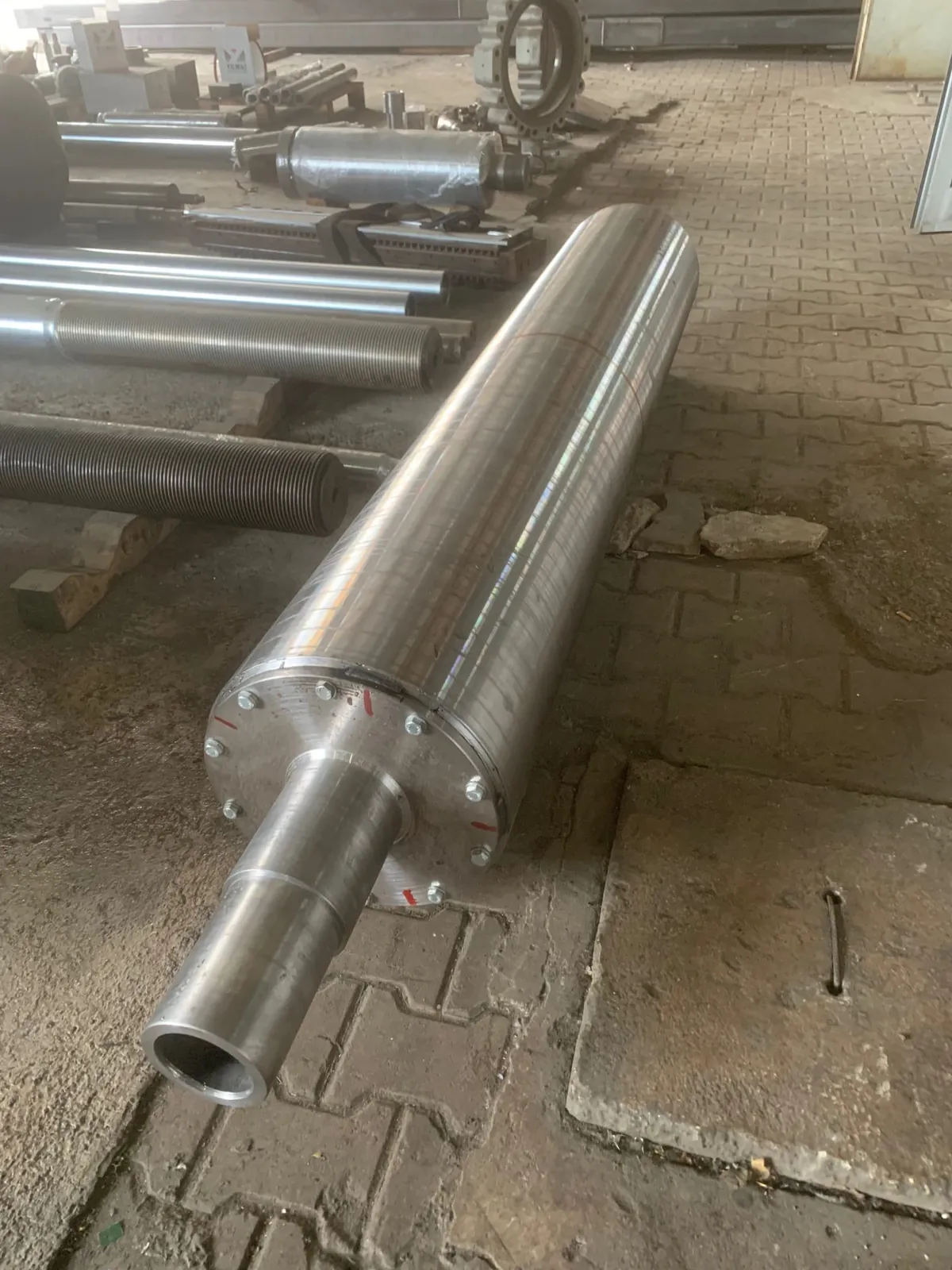
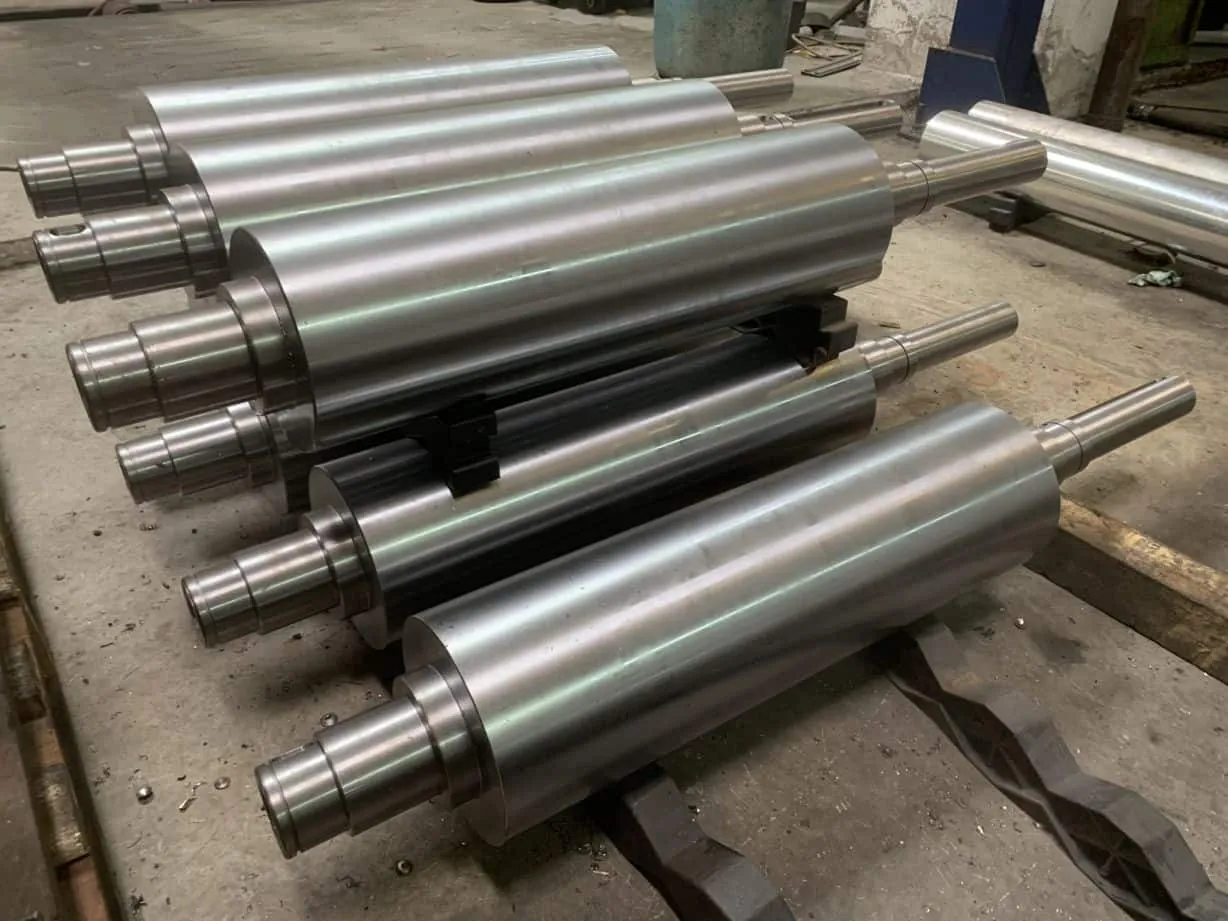
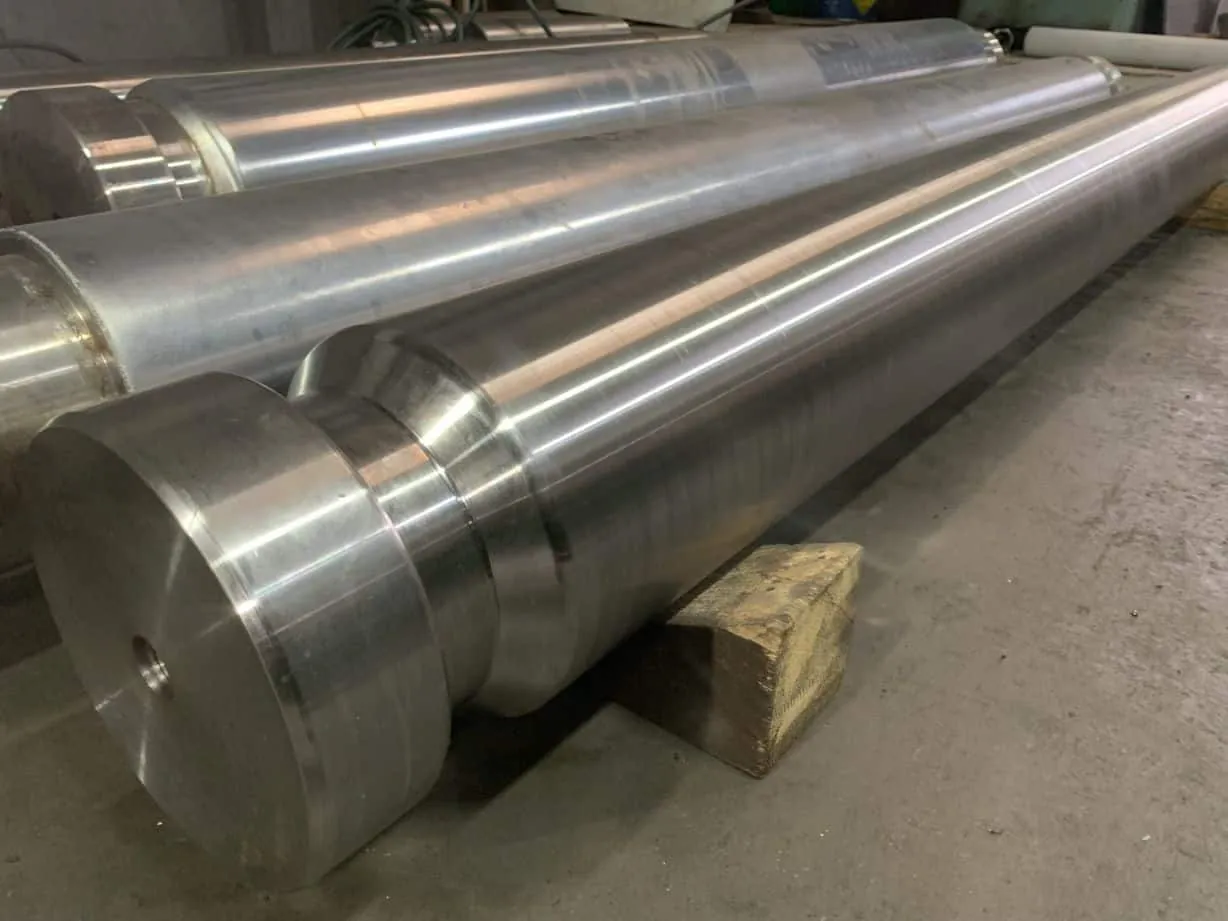
Rolls Ready for Balancing and Dispatch
Why Rollers Need Balancing
No roller is perfectly uniform. Small variations in shell wall thickness, welds, end discs and coatings put more mass on one side than the other. At speed, that uneven mass becomes a rotating force that shakes the roller, its bearings and the whole frame.
Dynamic balancing measures that unbalance in two planes while the roller rotates, and corrects it by adding or removing mass at defined positions. The roller then runs smoothly at its operating speed.
- Less vibration and noise
- Longer bearing life
- Better belt tracking and web quality
- Less stress on frames and foundations
Rollers We Balance
Conveyor drums
Drive and pulley drums after machining and lagging.
Learn more →Process rolls
Press, calender and guide rolls running at line speed.
Learn more →Large rollers
Heavy rolls up to Ø3,200 mm and 12 t.
Learn more →Repaired rolls
Rolls after regrinding, rechroming, relagging or recovering.
Learn more →Coated rollers
Rubber and PU covered rollers after covering.
Learn more →Chrome rolls
Hard chrome rolls after finish-grinding.
Learn more →Questions About Roller Balancing
Do you balance every roller?
Rollers are balanced when the drawing or application requires it, which includes most drums and process rolls. Tell us the balance grade you need.
Which balance grade do you work to?
The grade specified on your drawing or by your machine builder. If none is given, we recommend one based on speed and application.
Do you balance repaired rollers?
Yes. Rollers are rebalanced after repair, since regrinding, recoating and welding change the mass distribution.
Do you supply a balancing report?
Yes, on request with the roller documentation.
Balancing as the Last Machining Step
Static and dynamic unbalance
Static unbalance is what you would see if you rested a roller on knife edges: the heavy side turns to the bottom. Dynamic unbalance also includes the case where two heavy spots sit at opposite ends and opposite sides of the roller, which looks balanced at rest but makes the roller wobble when it turns. Long rollers and drums are especially sensitive to this, which is why we balance them dynamically, in two planes.
When balancing matters most
The higher the speed and the longer and heavier the roller, the more balancing matters. Process rolls in paper and film lines, high-speed guide rolls and large conveyor drive drums all benefit. Slow-running idlers usually do not need it. If your drawing specifies a balance grade, we balance to it; if not, we recommend one based on the roller's speed and application.
Balancing is the final step that turns a correctly sized roller into a smoothly running one. We balance after all machining, coating and lagging is complete, because every one of these steps changes the roller's mass distribution.
Balancing is included in our manufacturing of large rollers and conveyor drums, and in our repair service. Tell us your balance grade when you send the drawing via the contact page.
Balancing and coating
Rubber covers, lagging and chrome layers never go on with perfectly even thickness, and welding a roller shell always leaves some variation. This is why balancing comes after coating: a roller balanced before lagging will be out of balance again once the lagging is applied. On repaired rollers, the same applies after build-up welding, regrinding or recovering.
Signs a roller needs balancing
- Vibration that rises with line speed
- Bearings that fail sooner than expected
- Belt or web marks that repeat at the roller's circumference
- Noise from the roller or its frame at operating speed
If you see these signs on a roller in service, send it for inspection: often a rebalance, sometimes combined with a regrind, solves the problem.
Balancing for new and existing lines
For new rollers, the balance grade is usually set by the machine builder. For existing lines with vibration problems, rebalancing the rollers that run fastest or carry the most mass is often the quickest improvement. Send us the roller with its operating speed, and we balance it to suit.
Combined with other services
Balancing is most effective when combined with the right machining: a roller that runs out cannot be balanced into smooth running. That is why rolls with runout problems are usually reground first, then balanced, as part of our grinding and repair services.