Rubber & Polyurethane Coated Rollers
Steel rollers covered in rubber or polyurethane for grip, cushioning, sealing and wear resistance. New coated rollers on our own steel cores, and recovering of your worn rollers.
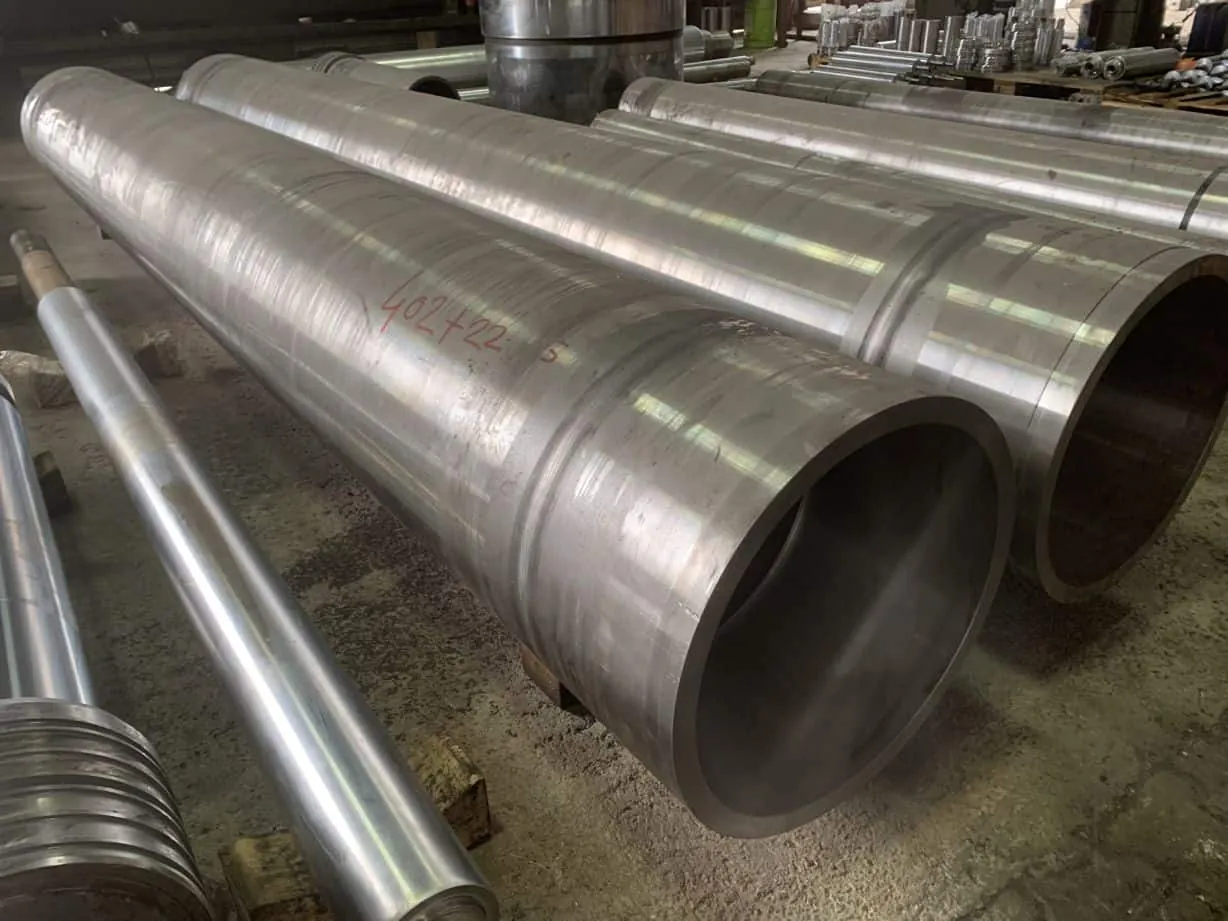
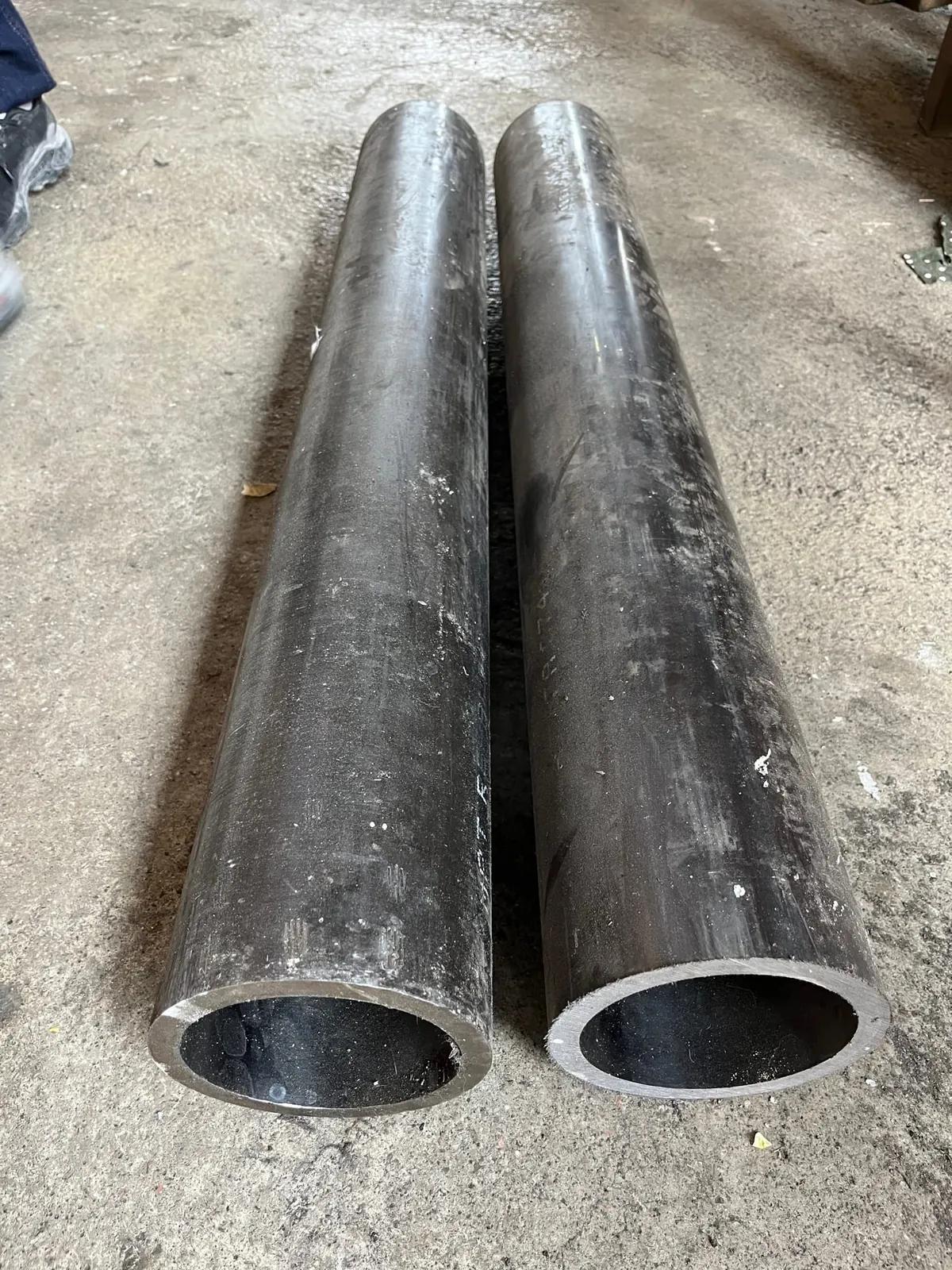
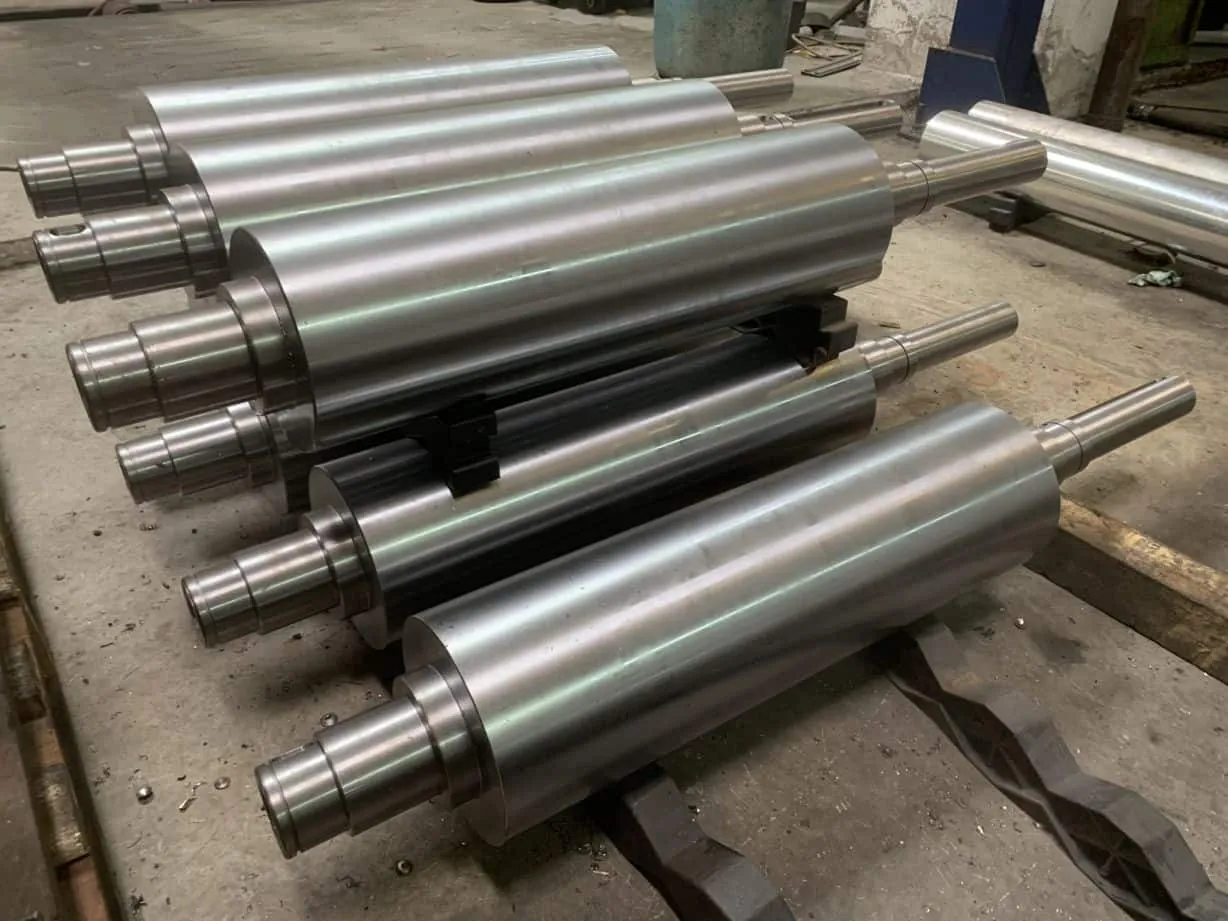
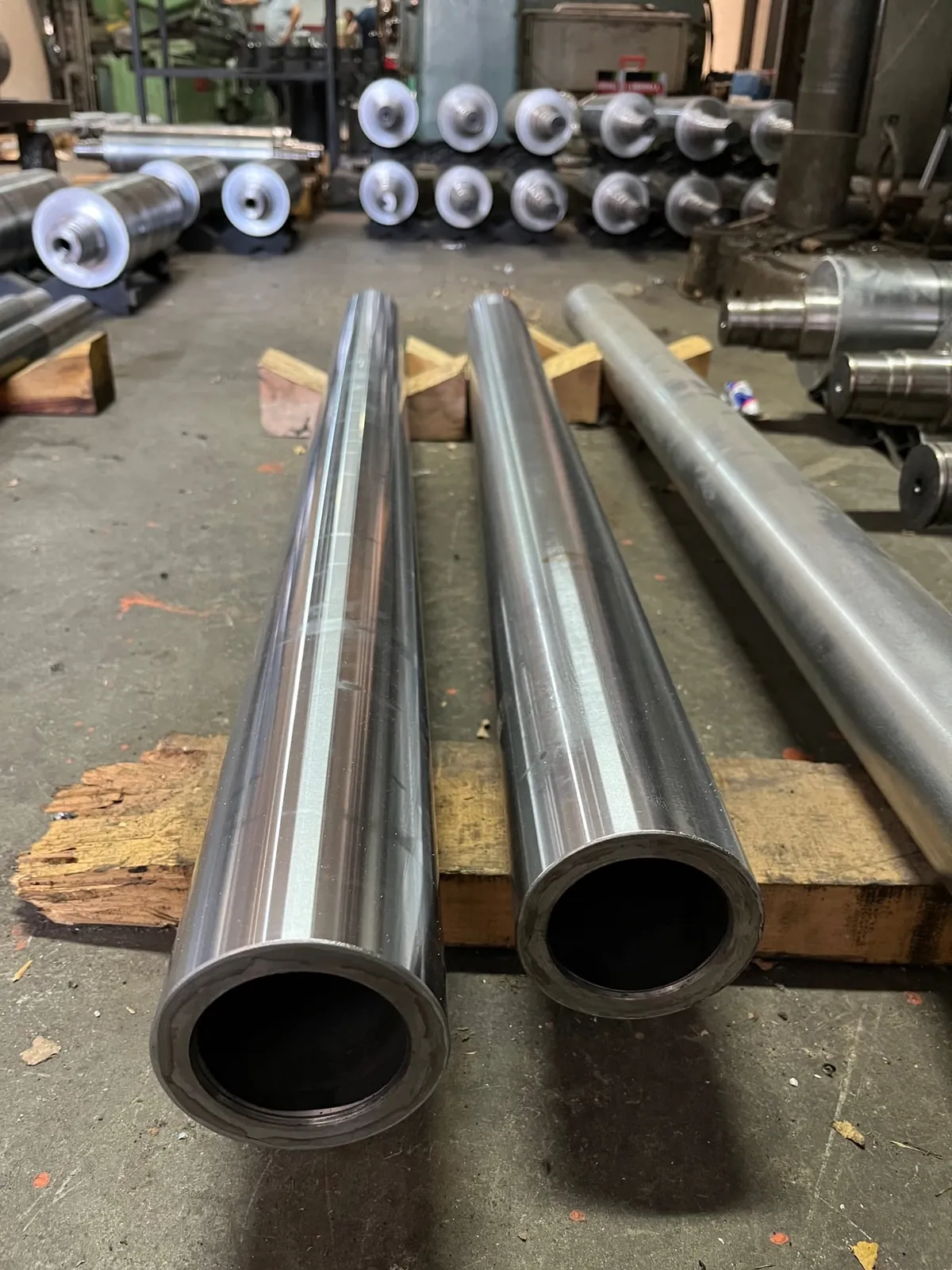
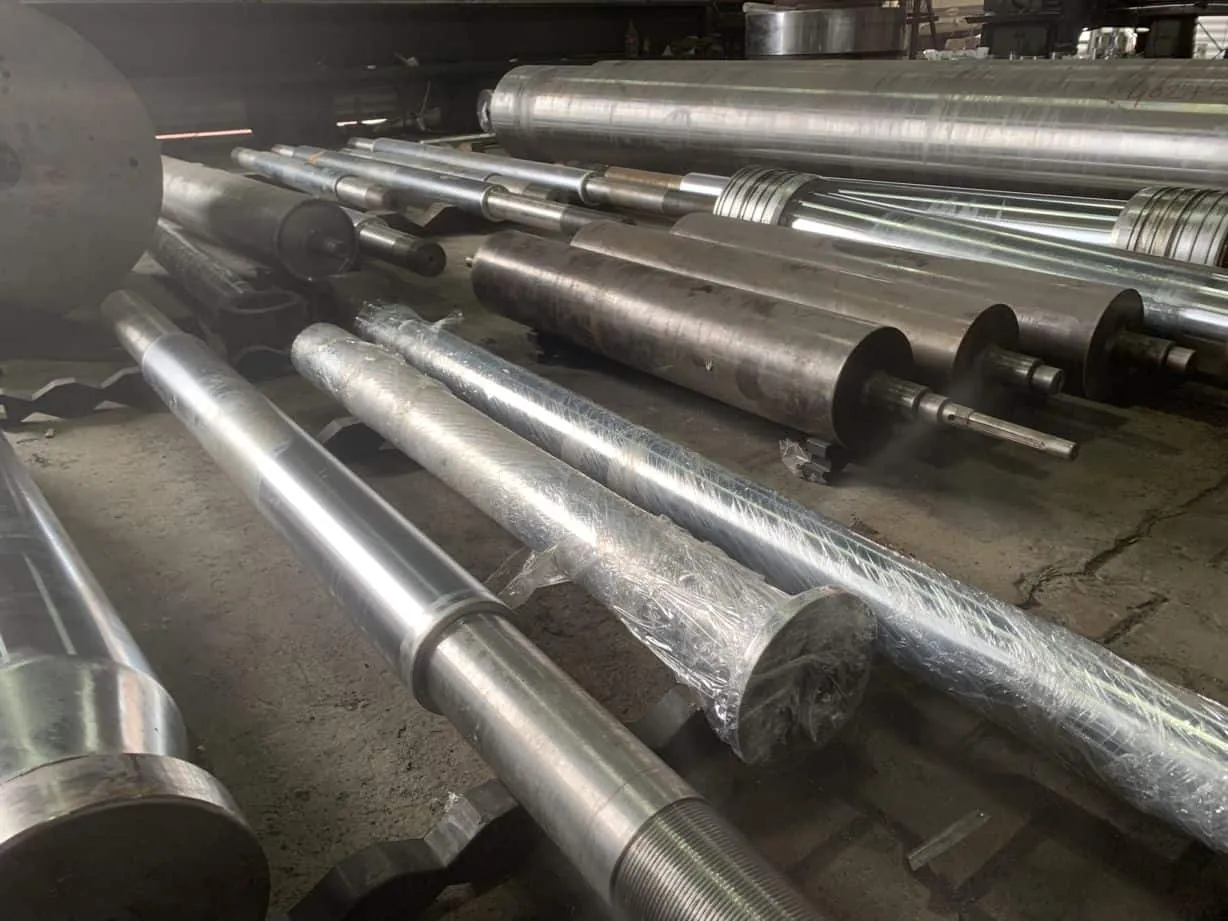
Steel Roller Cores Before Coating
A coated roller is only as true as its steel core. Our cores are turned, ground where needed and balanced before covering.
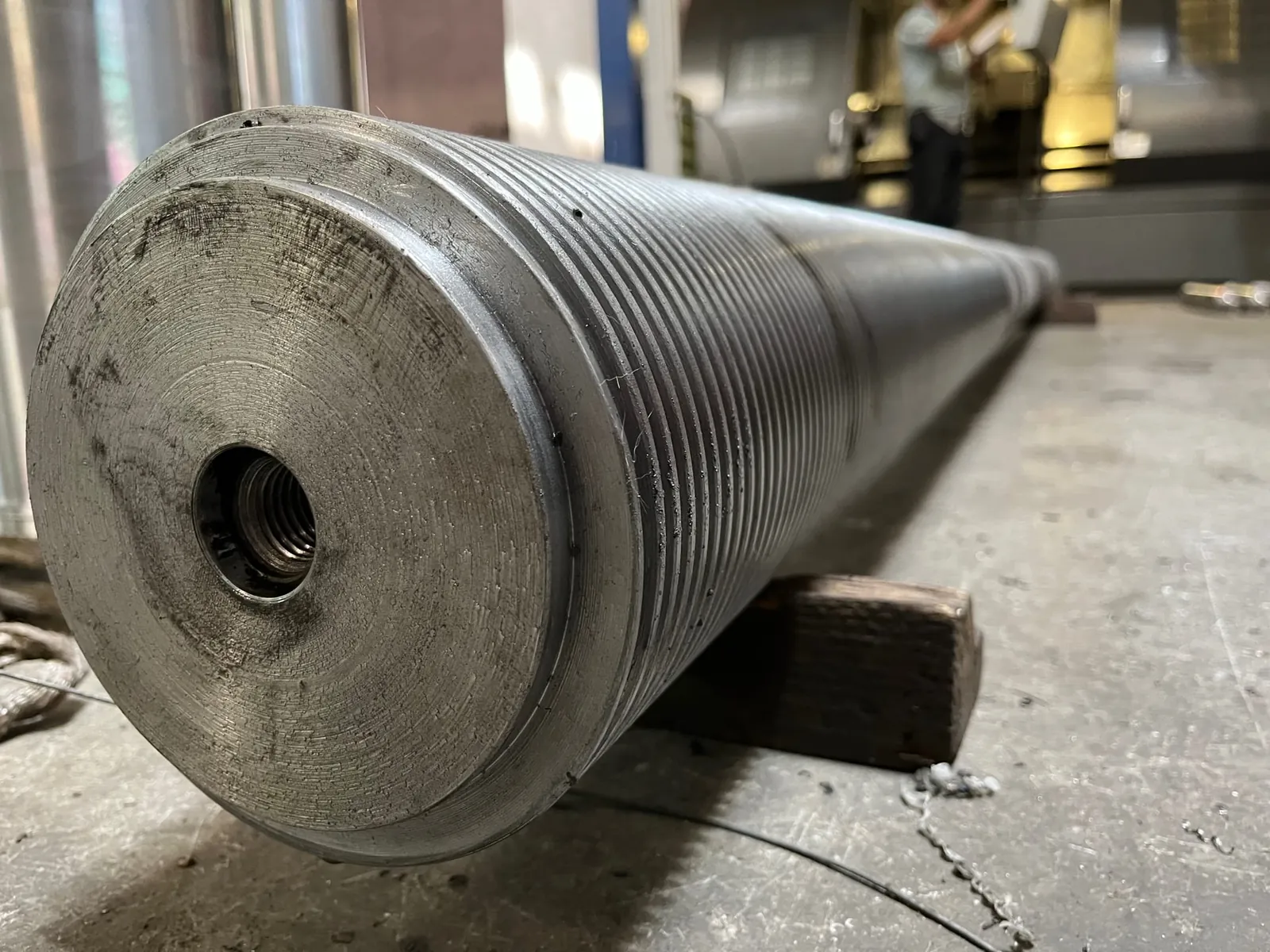
Which Cover for Which Job
Rubber covers
Good grip and cushioning, for drive, pressure, nip and handling rollers.
Polyurethane coating
High abrasion and cut resistance, for heavy-wear and impact applications.
Food-contact covers
Covers for food and packaging lines, specified to your requirement.
Grooved & profiled
Covers with grooves or profiles for water shedding, spreading or grip.
Coated Rollers Start With a True Steel Core
Most coated roller problems start under the cover: a core that runs out, a shaft that is not concentric with the shell, or a surface that was not prepared for bonding. Because we make the steel cores ourselves, we control all three.
- Cores turned and, where required, ground for concentricity
- Surfaces prepared for a reliable cover bond
- Covers applied to the hardness and thickness on your drawing
- Covers ground to final diameter and profile, including crowned covers
- Rollers balanced after covering
Coated Roller Options
Tell us the application, cover material, hardness (Shore A), cover thickness, finished diameter and any chemical, temperature or food-contact requirements.
| Cover materials | Rubber, polyurethane |
|---|---|
| Core | Steel or stainless steel, made in-house |
| Diameter | Up to Ø3,200 mm |
| Finish | Ground to diameter; flat or crowned profile |
| Recovering | Removal of worn cover and new covering |
| Supply | Roller only or complete with bearings and housings |
Questions About Coated Rollers
Do you make rubber covered rollers?
Yes. We make the steel core and apply rubber covers to the hardness and thickness on your drawing, then grind the cover to size.
Do you make polyurethane coated rollers?
Yes, for applications that need high abrasion and cut resistance.
Can you recover our worn rollers?
Yes. We remove the worn cover, inspect and repair the core if needed, and apply and grind a new cover.
What information do you need?
Application, cover material, hardness in Shore A, cover thickness, finished diameter, length and any food-contact or chemical requirements.
Rubber and PU Coated Rollers on Steel Cores We Make Ourselves
Rubber and polyurethane covered rollers run in conveyors, printing and converting lines, textile and paper machines, metal processing lines and food plants. The cover gives grip, cushioning or protection; the steel core gives strength and true running. We make both parts under one roof of responsibility, so the roller is right as a whole.
New coated rollers
We build new coated rollers on our own steel cores, from small handling rollers to large diameter rolls. For conveyor drums with rubber or ceramic lagging, see lagged conveyor drums.
Recovering worn rollers
When a cover wears, cracks or loses its bond, we strip it, check the core for runout and wear, repair it where needed and apply a new cover. This is part of our roller repair and refurbishment service.
Coated rollers are common in food processing, paper and pulp and metal processing. Send your requirement via the contact page.
Hardness, thickness and finish
A cover is specified by its material, hardness and thickness. Softer covers grip and cushion more, but wear faster; harder covers resist wear and hold their shape under pressure. Thicker covers absorb more shock and can be reground more often; thinner covers keep the roller diameter close to the steel core. After covering, the roller is ground to its final diameter and profile, flat or crowned.
Common applications
- Nip and pressure rollers in printing, laminating and converting
- Drive and feed rollers in packaging and handling machines
- Wringer and squeeze rollers in metal processing and washing lines
- Conveyor rollers that must protect the product or grip it gently
Tell us what the roller does, and what has failed before, and we help choose the cover.
Regrinding covers
Rubber and PU covers can often be reground when they wear unevenly, restoring a true surface without replacing the cover. Once the cover reaches its minimum thickness, it is replaced.