How to Specify a Conveyor Pulley
The information a manufacturer needs to quote a conveyor pulley correctly, first time. Use it as a checklist for your next enquiry.
In This Guide
A clear pulley enquiry saves weeks. When key data is missing, the manufacturer either guesses, which risks a wrong pulley, or asks questions, which delays the quote. This guide lists what to include, in the order a pulley engineer thinks about it.
1. Pulley position and function
Start with where the pulley sits on the conveyor: drive or head, tail, bend, snub or take-up. The position defines the load case. Drive pulleys transmit torque and carry the highest belt tension; bend and snub pulleys carry belt tension and the force of the wrap angle; tail and take-up pulleys carry tension with little or no torque. If the pulley is a drive pulley, include the drive power and speed.
2. Belt data
Give the belt width, belt type and rating, belt speed and, if known, the maximum belt tension at the pulley. Belt width sets the minimum face length; belt rating and tension set the minimum pulley diameter recommended by the belt manufacturer. If you only know the conveyor capacity and length, include them, and the manufacturer can estimate the tensions.
3. Pulley dimensions
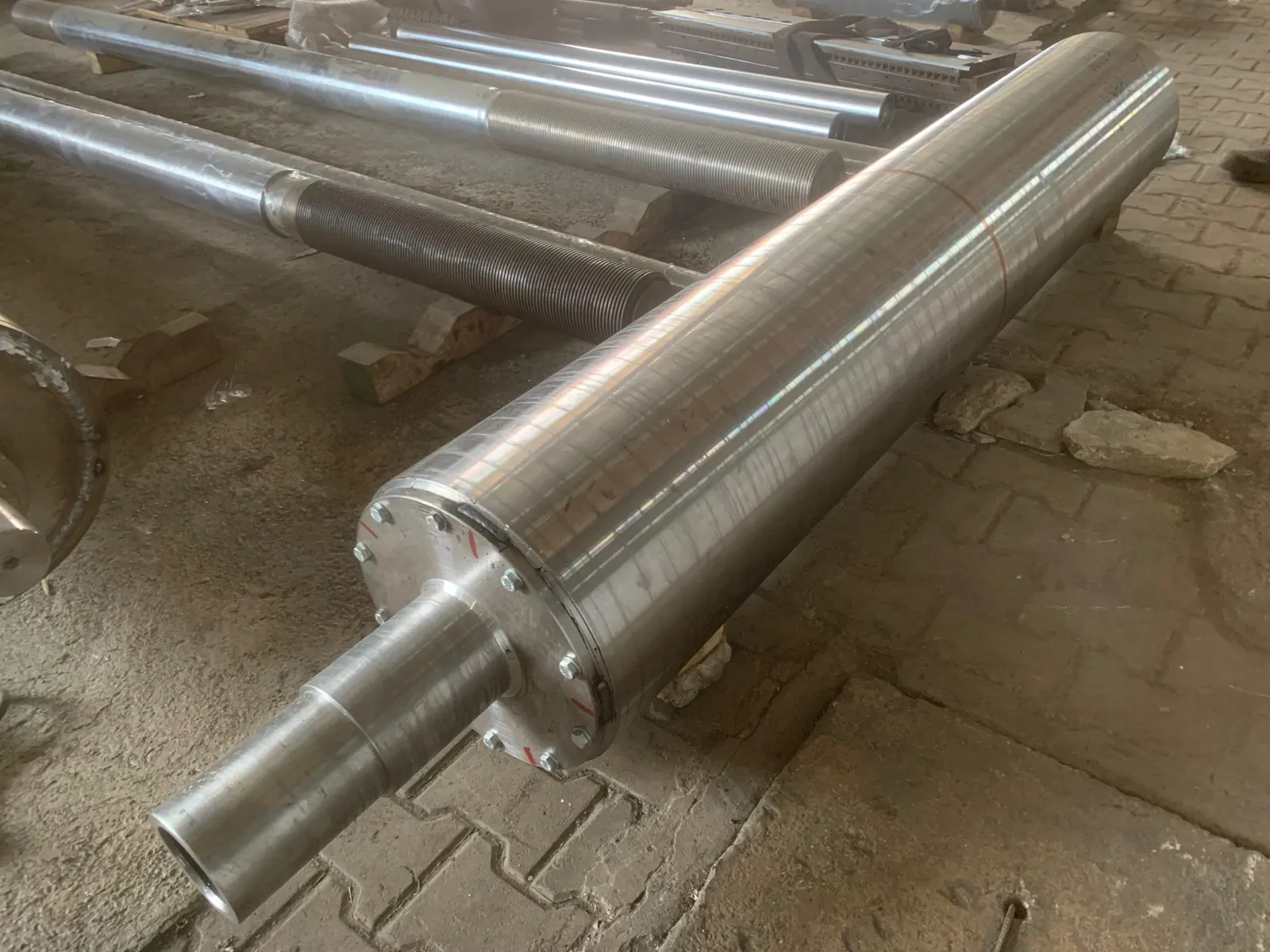
Specify the outside diameter (with or without lagging), the face length, and whether the face is flat or crowned. If the pulley replaces an existing one, the dimensions of the old pulley are the safest starting point, because the frame, bearings and drive are already built around them.
4. Shaft and hub connection
The shaft is the most stressed part of a pulley. State the shaft material, the bearing centre distance, the journal diameters at the bearings and the drive, and the shaft ends: keyways, threads or plain. Specify how the shaft connects to the shell: keyed hubs, shrink fit or locking assemblies. For high-tension drives, locking assemblies are common because they avoid the stress concentration of a keyway.
5. Bearings and housings
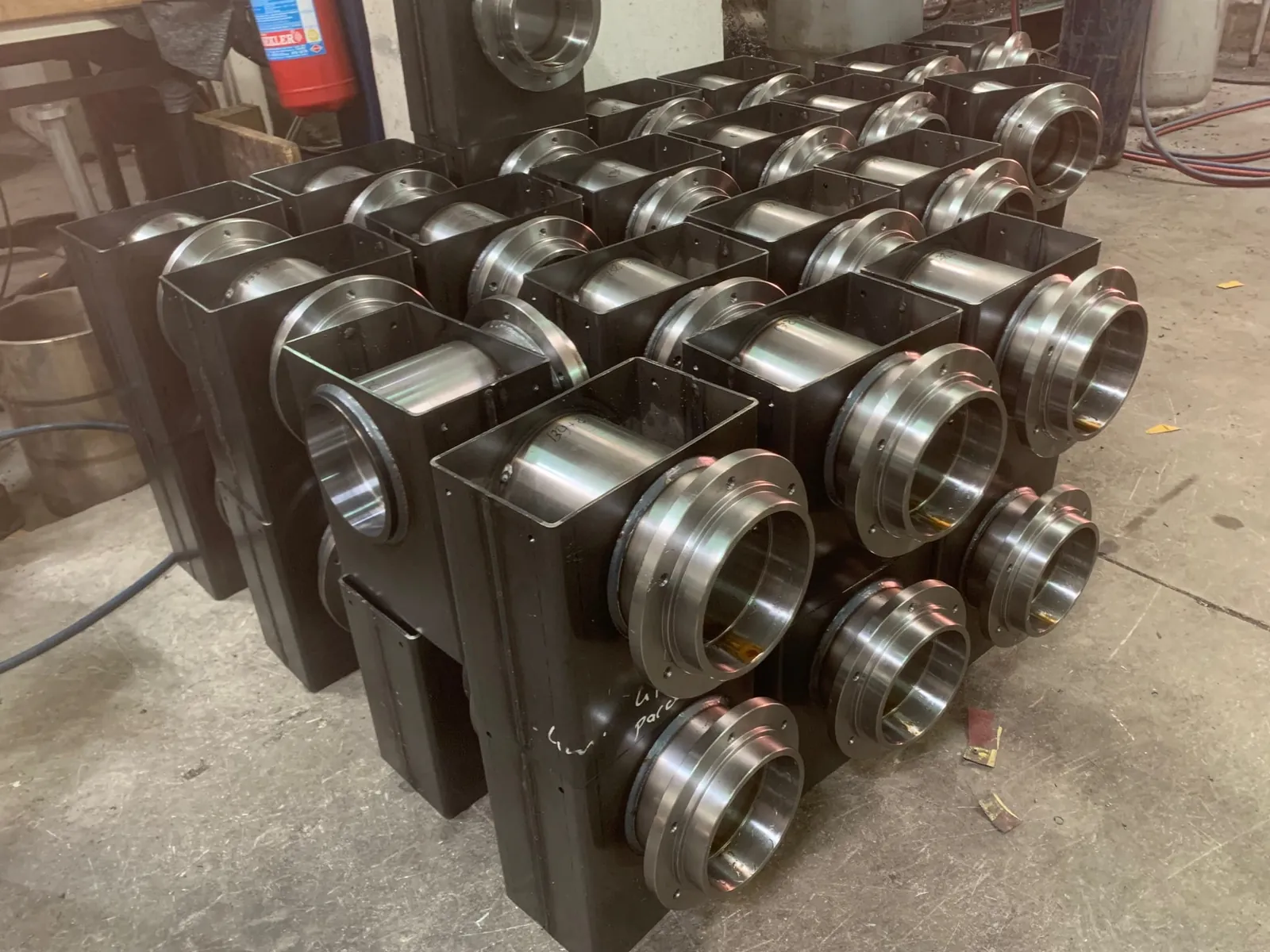
State whether the pulley should be supplied bare, with shaft only, or complete with bearings and housings. If complete, give the bearing type and size or the housing type, and whether one side is a locating and the other a floating bearing.
6. Lagging and surface
Drive pulleys usually need lagging. Specify rubber lagging (plain, diamond or herringbone) or ceramic lagging, and the running direction for directional patterns. For corrosion protection, state the paint system or galvanizing requirement. See our lagged drums page for the options.
7. Documents and inspection
List the documents you need: material certificates (EN 10204 3.1 or 3.2), dimensional and runout reports, welding documents, NDT reports and balancing reports. Specifying these up front ensures they are included in the price.
8. Quantity, delivery and destination
Give the quantity, required delivery date and delivery address, and the preferred delivery terms (EXW, FOB, DAP or DDP). For heavy pulleys, mention any unloading limits on site.
Quick checklist
- Pulley position, drive power and speed
- Belt width, type, rating, speed and tension
- Diameter, face length, flat or crowned
- Shaft dimensions, material and hub connection
- Bearings and housings, or bare
- Lagging type and corrosion protection
- Documents and inspection
- Quantity, delivery date and destination
Ready to send your enquiry? Use our contact page, or see conveyor drums and pulleys for our capacity. If you only have the old pulley, see replacement rollers.
Common mistakes in pulley enquiries
- Giving the diameter without saying whether it includes the lagging
- Leaving out the bearing centre distance, which defines shaft length and load
- Not stating the running direction for herringbone lagging
- Forgetting the documents, which then are not included in the price
If you only have the old pulley
Many enquiries start with a worn pulley and no drawing. In that case, measure the outside diameter at the edge of the face (where it wears least), the face length, the total shaft length, the journal diameters and the distance between bearing centres. Photograph both shaft ends and the end discs. Note the bearing numbers if you can read them. With this information, a manufacturer can prepare a drawing for your approval and build an exact replacement.
Crowned or flat face?
A crowned face, slightly larger in the middle than at the edges, helps the belt track centrally. It is common on tail and some bend pulleys. Drive pulleys with high-tension belts are often flat-faced to avoid stressing the belt centre. If in doubt, copy the existing pulley or ask the belt supplier.