Roller Materials and Coatings
Which steel, which surface and which coating for which job. A short guide to the main options for industrial rollers, conveyor drums and process rolls.
In This Guide
The right roller is a combination of a body that carries the load and a surface that suits the process. This guide covers the main choices for both.
Body and shaft materials
Structural and carbon steels are the standard for roller shells, end discs and most conveyor pulleys. They are strong, weldable and economical. Alloy steels such as 42CrMo4 are used for highly loaded shafts, where strength and fatigue resistance matter most; they can be quenched and tempered. Stainless steels are used where corrosion or hygiene is the main concern, such as food lines and wet chemical environments.
Hard chrome
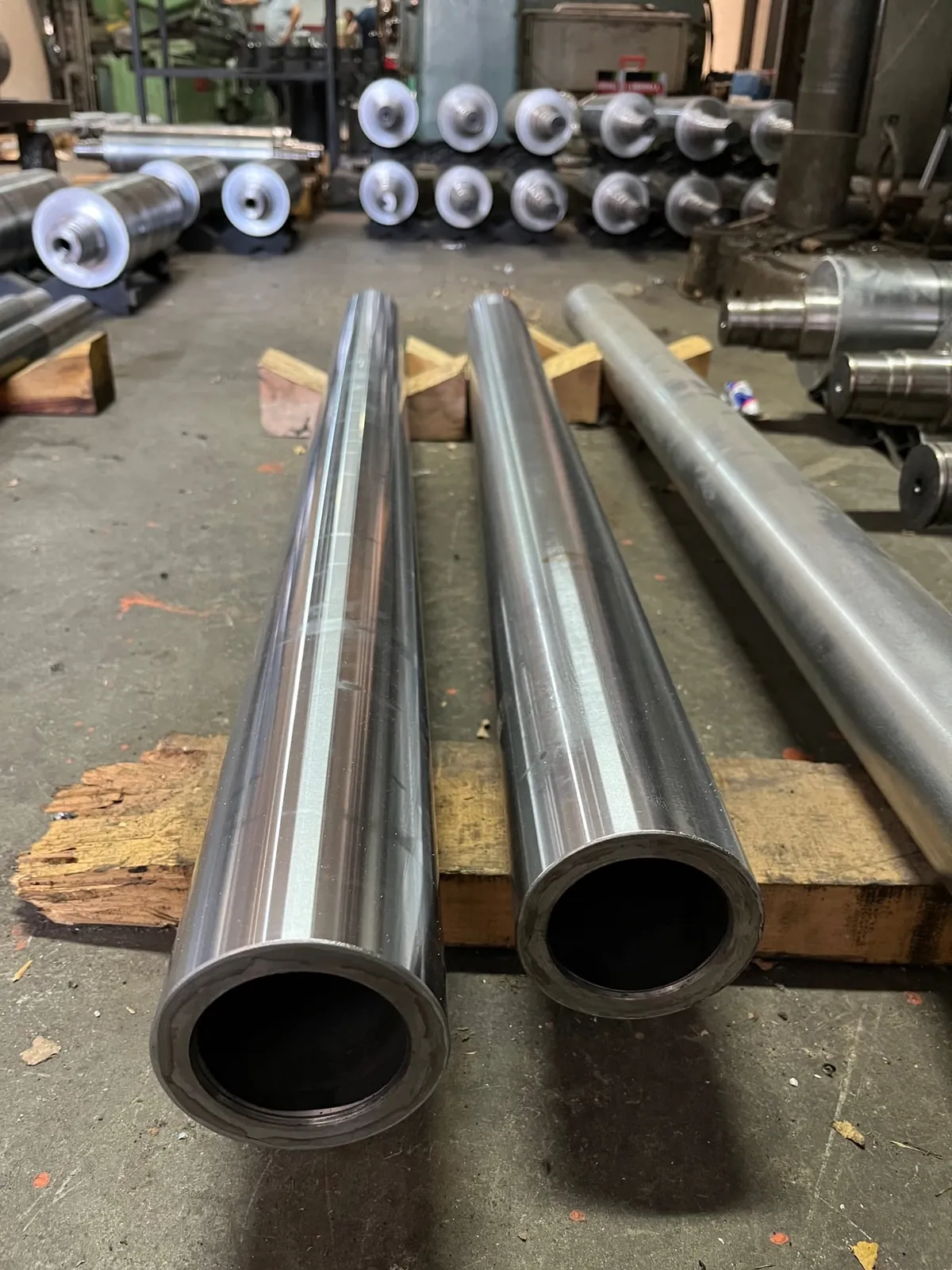
Hard chrome is an electroplated chromium layer that gives a hard, low-friction, corrosion-resistant surface. It is the standard for process rolls in paper, film and printing, for hydraulic piston rods, and for food rolls that must release the product cleanly. A chrome roll is ground before and after plating; worn chrome can be stripped and renewed. See hard chrome plated rolls.
Rubber covers
Rubber covers give grip, cushioning and sealing. They are used on drive, nip, pressure and handling rollers. Hardness is specified in Shore A: softer covers grip and cushion more, harder covers resist wear and hold their shape. See rubber and PU coated rollers.
Polyurethane
Polyurethane (PU) has higher abrasion and cut resistance than most rubbers, making it a good choice for heavy-wear and impact applications. It is common on rollers in material handling and metal processing.
Lagging for conveyor pulleys
Conveyor drive pulleys use lagging to increase belt grip: plain rubber for bend and snub pulleys, diamond or herringbone grooved rubber for drives, and ceramic lagging for the highest grip and wear life. See lagged conveyor drums.
Paint and galvanizing
For corrosion protection of conveyor drums, idler frames and stations, especially outdoors and near the sea, rollers and frames are painted to a coating specification or hot-dip galvanized.
Hardening
Where a steel surface itself must resist wear, such as bearing seats or wear surfaces on shafts, surface hardening can be specified on the drawing, followed by grinding to final size.
Choosing the combination
- Heavy conveyor drive pulley: structural steel shell, alloy steel shaft, ceramic lagging
- Bend or snub pulley: structural steel, plain rubber lagging
- Paper or film process roll: steel body, hard chrome, ground and balanced
- Food line roll: stainless steel or hard chrome, food-contact cover where needed
- Port conveyor stations: galvanized frames, sealed idlers
Not sure which combination suits your application? Ask our engineers and describe the process, speed, load and environment.
Environment checklist
Before choosing materials and coatings, describe the environment: temperature, moisture, chemicals, abrasive material, food contact and outdoor or coastal exposure. Add the process demands: speed, load, required grip or release, and surface finish. With these, the right combination is usually clear.
Cost versus life
Better surfaces cost more up front but often save money over the roller's life. Ceramic lagging costs more than rubber, but on a slipping drive pulley it can last many times longer and prevent belt damage. Hard chrome adds cost to a process roll, but it can be stripped and renewed many times while the roll body stays in service. When comparing quotes, compare the expected service life, not just the price.
Standards and specifications
If your company has a coating or material specification, include it in the enquiry. Otherwise, describe the application and we suggest a combination, which you approve before production.
Combining coatings
Some rollers combine surfaces: a chrome-plated body with hardened journals, or a rubber-covered roller with a painted core and ends. The drawing should show which surface goes where, including areas that must stay uncoated for bearings and seals.